


Making it Beta
 Beta tests are a big deal to everybody, whether it’s the developer who needs to test the server hardware and software issues, the publisher judging reaction to what they’ve put so much money into or the end user, excited to be amongst the first to play a game they’ve waited so long for. It would be impossible to say that it’s a bad thing to beta test a game, but over the last few years there has been a definite shift, probably watched over by PR and marketing people, towards the beta being an important way for everybody to get their first glimpse of what an MMO could be at launch and has become nothing more than a glorified publicity stunt, a demo and competition all rolled into one.
Console Complaints
It’s something that I first noticed happening on consoles. I remember the first night of the Metal Gear Online 2 beta, downloading the software for hours on end (and signing up to the Japanese Konami site in case I couldn’t get access to the game from England) and being met with an error message. Thousands, perhaps hundreds of thousands of people jumped on the internet to complain about not being able to get past the sign-in screen and, in return, Konami promised a grand re-opening after they have fixed their server problem. That justified the beta for me, they had discovered an issue even before a single match had begun and they worked hard to fix it before the beta begun proper and the game launched further along the line.
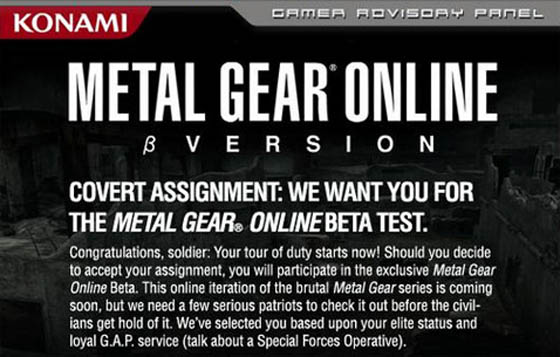
In the grand scheme of things, five years isn’t a big deal. In the gaming industry, it’s a lifetime. Characters have lived and died, companies have disappeared, franchises have been cancelled and brought back to life. In five years the face of the industry has changed and the idea of digital gaming on a console has become more than “just a neat idea.” With the rise in capable internet worldwide, developers have had to evolve their business models and there’s nowhere that this is better displayed than with betas. Gone are the days when you can access multiplayer portions of a title months before release; often the beta is released weeks before you’d be able to play it anyway, and more annoying, often the game has already gone gold and is being pressed.
Having the beta so close to release completely defeats the point of having the beta at all, there’s nothing the developer can change in the software (although they might be working towards those pesky day one patches) and there’s a good chance most of the staff have gone on holiday or are, at the very least, taking a break after a tough pre-release schedule. So why do publishers do it? Because having a closed event involving a heavily marketed game to which only a lucky few are invited will get people talking and, of course, talking means sales.
The PC MMO
So how does this affect PC gamers? Those pesky console folks are living in a world of patches and DLC and high cost digital distribution and so getting screwed over on betas is par for the course isn’t it? Why should the average MMO player, somebody undoubtedly familiar with the tricks and trials that come with playing any game on a PC, worry about beta access on consoles? The answer is simple: because it doesn’t take a huge amount of time or effort to find examples of companies using the beta test to their advantage while marketing their next big MMO. And, trust me, chances are you’re doing very little to help build on the game by joining a beta test.
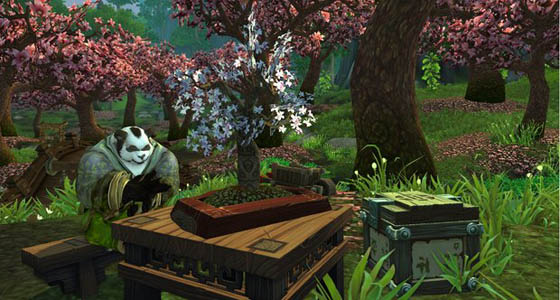
First look at Pandaria
Take for instance World of Warcraft’s next big expansion: Mists of Pandaria. There are millions of people, both currently playing World of Warcraft and who will be tempted back by an expansion, who would kill to get into the beta for Mists of Pandaria; not just because of the ability to bother nearly extinct wildlife. The beautiful colours, the mysterious origins of Pandaria are incredibly tempting to a long-time World of Warcraft enthusiast and chances are if you REALLY want a code you’ve already got one. At the end of last month, 100,000 people were invited into the beta. The following day, another 100,000 were invited. That’s 200,000 people suddenly jumping onto the beta servers and there’s every reason to believe more will be invited over the coming months.
Now Blizzard is a big company with a lot of money and a lot of experience on building a quality MMO. They learnt the hard way that having too many people on their servers is going to crash the game for everybody and there’s no way they’re going to overstep their comfort zone. But I want you to just think about that number – 200,000 people. That’s not including the people who had access to it before. This isn’t mere stress testing, it goes far beyond that. This is Blizzard’s attempt at pleasing everybody while, at exactly the same time, creating hype, creating value, creating demand for their next title. They’re having their cake and eating it, a relatively new but rapidly increasing occurrence from big companies.

TERA
This weekend I’ve also done something I’ve never had to do before which is buy my way into a beta. For the sakes of full disclosure, I didn’t actually HAVE to buy my way into the beta, I could have signed up months ago and relied on luck getting me a place, but I’m not that well organised and I’m certainly not that lucky. So I bought a pre-order pack which gives me a place in the beta and then reduces a set amount if I choose to buy the full title come release. It technically doesn’t cost me anything, so long as I buy the full game, but that technicality doesn’t exactly sit well with me. Rather than creating a false value amongst fans, the developers of TERA have given a place on their beta testing team an ACTUAL value.
I’m not sure what to think about that. I don’t feel screwed over and I don’t feel the developers have done this to make a quick buck (although they undoubtedly have, taking money from people with no intention of playing the full game but who wanted access during the closed tests) but, as with the Metal Gear Online Beta, I see this as something that, handled by the wrong people, could get rapidly out of hand (and more importantly, out of my wallet).

Conclusion
So what should we expect next? On top of pre-order bonuses and digital downloads, betas can now be bought if you have the inclination and the very worst thing that can happen – and that makes it practically guaranteed, by the way – is that developers start charging for the multiplayer demos that these betas have become. “Pay just a few pennies and you can have early access to one of the hit multiplayer experiences of this year” – it sounds like something that could be right off Xbox Live and the PlayStation store. And if it works on consoles, it could work on Steam and other digital platforms. And from there, my friends, the world.

 | or Login/Register
Go MMO on Twitter
Follow us for fantastic MMO giveaways, contests and all the latest news and reviews for the newest MMO games in 2013.




Comments
Post new comment